2026 Best Guide What Is Demand Response in EV Charging?

Time:2026-10-12 Author:Henry
0%

As electric vehicles spread, charging becomes more than a transportation issue. It becomes a grid-management challenge. The International Energy Agency reported that global electric car sales exceeded 17 million in 2024, creating millions of new charging loads. These vehicles may arrive home together, at the same time.

So, what is demand response in EV charging? It is the coordinated adjustment of charging power in response to grid conditions, electricity prices, or utility signals. A vehicle can charge at 11 p.m. instead of 6 p.m. It may also pause briefly during a local peak, then resume automatically. The driver still receives the required energy before departure.

Energy economist Dr. Ahmad Faruqui describes demand response as “the ability of customers to reduce their electricity usage in response to a price signal.” His explanation highlights the customer’s role, not just the charger’s technology. The U.S. Department of Energy’s National Renewable Energy Laboratory has also identified managed charging as a practical tool for reducing peak demand, integrating renewable energy, and limiting distribution-system upgrades. Meanwhile, the IEA’s Global EV Outlook 2024 shows that charging infrastructure must expand rapidly as EV ownership grows.

The benefits sound straightforward. Reality is less tidy. A driver may reject delayed charging before a long trip. A weak internet connection can interrupt control. Poorly designed programs may also shift demand instead of reducing it. This guide examines the technology, financial signals, customer experience, and reliability questions behind EV charging demand response. Forecasts can be wrong. Good programs must learn from real charging behavior.
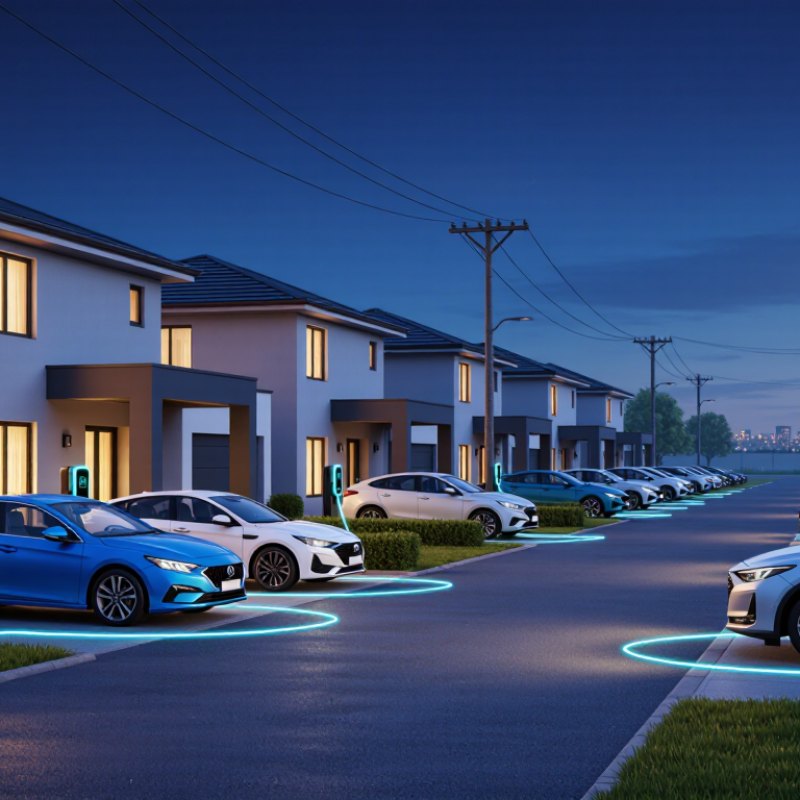
2026 Best Guide What Is Demand Response in EV Charging?

What Is Demand Response in EV Charging?

Demand response in EV charging means adjusting charging activity when the electricity grid needs support. Instead of every vehicle charging immediately, smart chargers can reduce, pause, or shift power use. Charging may resume when demand falls or renewable energy becomes more available. The vehicle still receives energy, but timing becomes flexible.

In practice, a workplace with twenty electric cars may create a sharp evening peak. A demand response system can delay several vehicles for thirty minutes. It can also lower charging power across many parking spaces.

Drivers should set departure times and minimum charge levels. These settings protect daily travel needs while allowing controlled grid participation.

The process depends on accurate signals, reliable software, and clear user permissions. A charger may lose its connection. A driver may leave earlier than expected. These details matter. From field experience, simple controls often work better than complicated schedules. Operators should review charging records, missed targets, and driver complaints regularly. Demand response is useful, but it is not automatic perfection. Poor settings can create delays, uneven charging, or frustration. Careful testing remains necessary.

How Does Demand Response Work for Electric Vehicles?

Demand response in EV charging means adjusting charging demand when the grid becomes strained or electricity prices change. For electric vehicles, software or a trained operator can delay, reduce, or briefly increase charging power. The vehicle still charges, but its schedule becomes more flexible. In practice, a home charger may pause at 6 p.m., when many households return and plug in. It can resume later, when demand falls and renewable electricity is more available.

The process starts with a signal from a utility, grid coordinator, or energy management system. That signal may request lower power for ten minutes or a longer period. A controller checks the vehicle’s departure time, battery level, and requested charge. It then chooses a safe charging rate without exceeding equipment limits. This requires accurate data, clear user permissions, and reliable communication. Field experience shows that small timing errors can frustrate drivers. A scheduled car may not receive its target charge. That weakness deserves honest attention.

Tips: Set a realistic departure time and keep a minimum battery reserve. Review charging notifications rather than assuming every session will follow plan. Installers should verify electrical capacity, network security, and manual override options. Test the response during normal conditions before depending on it during grid stress. Small safeguards matter.

2026 Best Guide: What Is Demand Response in EV Charging? — How Does Demand Response Work for Electric Vehicles?

Demand Response and Electric Vehicle Charging: Key Data Dimensions
Data Dimension Typical Value or Range How It Relates to Demand Response Practical Example
Demand response definition A temporary change in electricity consumption in response to grid conditions, electricity prices, or an external control signal. EV charging can be delayed, reduced, increased, or occasionally stopped without changing the driver’s required departure time. A charging session is paused during a local evening peak and resumes during a lower-demand period.
Common EV charging load Approximately 1.4 kW for Level 1 AC; about 3.3–19.2 kW for Level 2 AC; roughly 50–350 kW for high-power DC charging. Higher-power chargers can provide larger load reductions, but they may have shorter charging windows and stricter mobility requirements. A 7.2 kW AC charger reduced to 3.6 kW provides approximately 3.6 kW of flexible load.
Primary demand response actions Delay, pause, slow, schedule, or increase charging. These actions shift charging energy away from constrained periods or use available capacity when the grid has surplus supply. The system changes charging from 7.2 kW to 2.4 kW while preserving the vehicle’s target state of charge.
Typical grid conditions that trigger control High system demand, local transformer congestion, high wholesale prices, renewable-energy surplus, or frequency deviations. Charging becomes a controllable electrical load that can support system balancing and distribution-grid management. Charging is moved from a high-demand evening period to a midday period with abundant solar generation.
Response speed Scheduled load shifting may operate over hours; automated balancing actions may respond in seconds to minutes. The required response speed depends on the grid service, communication system, charger controls, and electricity-market rules. A workplace charging program schedules vehicles overnight, while a grid-balancing program adjusts power automatically.
Available flexible capacity Flexible capacity equals the charging power that can be reduced or shifted while meeting minimum energy and departure requirements. It is not always equal to the charger’s rated power because the vehicle may need uninterrupted charging before departure. Ten vehicles charging at 7.2 kW may provide up to 72 kW of connected load, but the dependable flexible amount may be lower.
Energy required for a charging session Energy in kilowatt-hours equals average charging power in kilowatts multiplied by charging time in hours. A demand response program shifts the timing of this energy requirement; it normally does not eliminate the energy needed for the trip. Charging at 7.2 kW for 4 hours supplies approximately 28.8 kWh before charging losses.
Driver constraints Departure time, minimum state of charge, required energy, charging location, and willingness to accept interruptions. A successful control strategy must protect mobility requirements before optimizing grid value. The system allows charging interruptions only if the vehicle will still reach its target state of charge before departure.
Control architecture Utility or market signal → energy-management platform → charger or site controller → vehicle. Real-time data, interoperable communication, and local safety controls coordinate charging changes. A site controller limits the combined output of multiple chargers to prevent a building peak.
Unidirectional charging Electricity flows from the grid to the vehicle; charging power is adjusted without exporting energy. This is the most straightforward demand response model because it uses charging control only. The charger reduces or pauses power during a peak event and resumes afterward.
Bidirectional charging Electricity can flow from the vehicle battery back to a building or the grid, subject to compatible equipment and rules. It can provide additional flexibility, but it requires suitable vehicles, power electronics, controls, interconnection, and battery-management limits. A vehicle supplies limited energy to a building during a short peak period and recharges later.
Site-level peak management The controller keeps total building and EV demand below a defined power limit. This can reduce demand charges, avoid transformer overload, and coordinate charging with other building loads. A facility limits combined EV charging to 100 kW when the building approaches its contracted demand threshold.
Potential benefits Lower peak demand, reduced charging costs, better use of renewable electricity, improved grid reliability, and delayed infrastructure upgrades. The actual benefit depends on tariffs, program payments, network constraints, participation levels, and charging flexibility. A fleet charges during lower-cost periods while retaining enough energy for scheduled routes.
Important limitations Limited flexibility, communication failures, driver overrides, battery constraints, network restrictions, and possible charging delays. Programs need clear customer settings, fallback operation, cybersecurity, privacy protection, and minimum service guarantees. If a vehicle’s departure time changes, the system must update the schedule or immediately restore charging.
Basic performance metrics Peak-load reduction in kW, shifted energy in kWh, response time, event duration, customer opt-out rate, and target-completion rate. These measures show whether the program delivers grid value without compromising driver mobility. A program reports the average kW reduction during events and the percentage of vehicles meeting their departure targets.

Note: Charging power varies by vehicle, charger configuration, electrical service, temperature, battery state of charge, and local regulations. The values above are general planning ranges rather than guaranteed operating ratings.

Which Technologies Enable EV Charging Demand Response?

Smart EV charging demand response depends on connected hardware and timely data. Smart chargers can reduce power during grid stress, then resume charging when capacity returns. They follow utility signals through secure cloud platforms or local energy management systems.

Advanced metering infrastructure measures electricity use in short intervals. This data helps operators identify peak demand and verify delivered flexibility. Open communication protocols allow chargers, vehicles, and control platforms to exchange charging schedules. Dynamic load management is also important. It balances several vehicles without exceeding a building’s electrical limit. In some installations, bidirectional chargers can send stored energy back to a facility or the grid. However, vehicle compatibility, battery limits, and local connection rules still restrict this option.

Tips: Use a charger with remote control, accurate metering, and offline fallback. Test communication failures before enrolling vehicles in a demand response program. Keep charging limits visible to drivers. A practical site trial often reveals problems that simulations miss. For example, weak cellular coverage can delay a control signal, while a poorly configured schedule may leave vehicles undercharged. No system is perfect. Regular performance checks, clear driver consent, and layered cybersecurity make the response safer and more dependable.

What Are the Benefits and Challenges of Demand Response?

Demand response makes EV charging flexible. Instead of charging every vehicle immediately, a system shifts, slows, or briefly pauses charging when electricity demand rises. Drivers still receive their requested battery level before departure.

The opportunity is substantial. The International Energy Agency estimates global EV electricity demand could grow from about 130 TWh in 2023 to nearly 1,100 TWh by 2035 under stated policies. Coordinated charging can reduce evening peaks, support renewable energy, and lower costly grid upgrades. A vehicle parked at 7 p.m. can wait until wind generation increases overnight. It can also respond within minutes to local grid conditions. The U.S. Department of Energy identifies managed charging as a practical pathway for improving grid flexibility. However, savings depend on tariffs, charger capability, and accurate customer participation.

The challenges are less visible. Drivers may reject delayed charging after one missed departure. Battery health concerns also require transparent control limits and credible research. NREL’s studies on managed charging highlight the importance of communication standards, reliable data, and distribution-grid coordination. Utilities must establish fair baselines, because poor measurements can produce unfair payments. Cybersecurity needs constant attention. So does access. Households without private parking may struggle to receive the same benefits. The model is not perfect. Real-world pilots should test comfort, payment accuracy, and charging reliability across different homes and workplaces, rather than assuming every driver behaves predictably.

How Will Demand Response Shape the Future of EV Charging?

Demand response will turn EV charging from a fixed electricity load into a flexible grid resource. Instead of charging every vehicle immediately, software can delay, slow, or briefly pause sessions during peak demand. Drivers still receive their requested energy before departure. Timing matters.

The IEA Global EV Outlook 2024 reports that electric car sales exceeded 17 million in 2024. It also projects that public charging capacity may need to expand nearly sixfold by 2035 under stated policies. This growth will pressure local transformers, especially when commuters plug in between 5 and 8 p.m. Demand response can shift charging toward overnight hours, solar-rich afternoons, or periods with lower wholesale prices. The U.S. National Renewable Energy Laboratory identifies managed charging as a practical method for reducing peak loads and supporting renewable integration.

The future will depend on trust, not automation alone. A workplace charger might reduce power for ten minutes, while a home charger restores full speed before 6 a.m. Clear consent, transparent savings, and reliable departure settings will matter. Field demonstrations show technical potential, but customer participation remains uneven. That weakness deserves attention. Not every driver accepts delayed charging, particularly during extreme weather or unexpected travel. Utilities, charging operators, and regulators will need measurable performance data, strong cybersecurity, and simple customer controls. Otherwise, demand response could become another complicated feature that ordinary drivers ignore.

FAQS

What is demand response in EV charging?

It adjusts charging when the electricity grid needs support. Smart chargers may reduce, pause, or shift power use. The vehicle still receives energy.

Can drivers still get enough charge?

Usually, yes. Drivers set departure times and minimum charge levels. These settings protect daily travel needs. Poor settings can still cause delays.

How does demand response work at a workplace?

A site with twenty vehicles may create an evening peak. The system can delay several cars for thirty minutes. It can also lower power across many parking spaces.

Which technologies support managed EV charging?

Connected chargers, accurate meters, and control software are important. Communication systems send charging instructions. Local backup controls help when the connection fails.

What happens if the charger loses communication?

An offline fallback can keep charging within safe limits. Weak cellular coverage may delay a control signal. It can still fail.

Can EVs send electricity back to a building?

Some bidirectional chargers can return stored energy. Vehicle compatibility, battery limits, and local connection rules restrict this option. The feature is not universal.

Why are driver permissions and clear controls important?

Drivers may leave earlier than expected. They need visible charging limits and simple departure settings. Delayed charging feels frustrating when controls are unclear.

How can demand response support renewable energy?

Charging can move toward solar-rich afternoons or quieter overnight periods. This reduces pressure during evening peaks. Timing matters.

What problems should operators review regularly?

They should check charging records, missed targets, and driver complaints. Field trials may reveal problems that simulations miss. Not every schedule works well.

What will determine the future of EV charging demand response?

Trust, reliable performance, cybersecurity, and transparent savings will matter. More vehicles may increase pressure on local transformers. Automation alone is not enough.

Conclusion

Demand response in EV charging is a smart energy strategy that adjusts vehicle charging according to electricity demand, grid conditions, and user preferences. In this guide, you will learn what is demand response in EV charging and how it helps balance energy supply with charging needs. Charging may be delayed, reduced, or increased during suitable periods, while drivers can still receive the energy they need through flexible schedules and agreed settings.

The guide also explains the technologies that support this process, including connected chargers, smart meters, energy management software, real-time data, and automated communication systems. Demand response can lower energy costs, reduce pressure on the grid, support renewable energy integration, and improve charging reliability. However, it may also involve challenges such as communication requirements, data protection, system compatibility, user participation, and the need for clear control policies. As EV adoption grows, demand response is expected to become an important foundation for efficient, flexible, and sustainable charging networks.

Henry

Henry

Henry is a dedicated marketing professional with a profound expertise in the company's offerings. With years of experience in the industry, he possesses an impressive understanding of the market dynamics and consumer behaviors that drive success. Henry is committed to sharing his insights through......