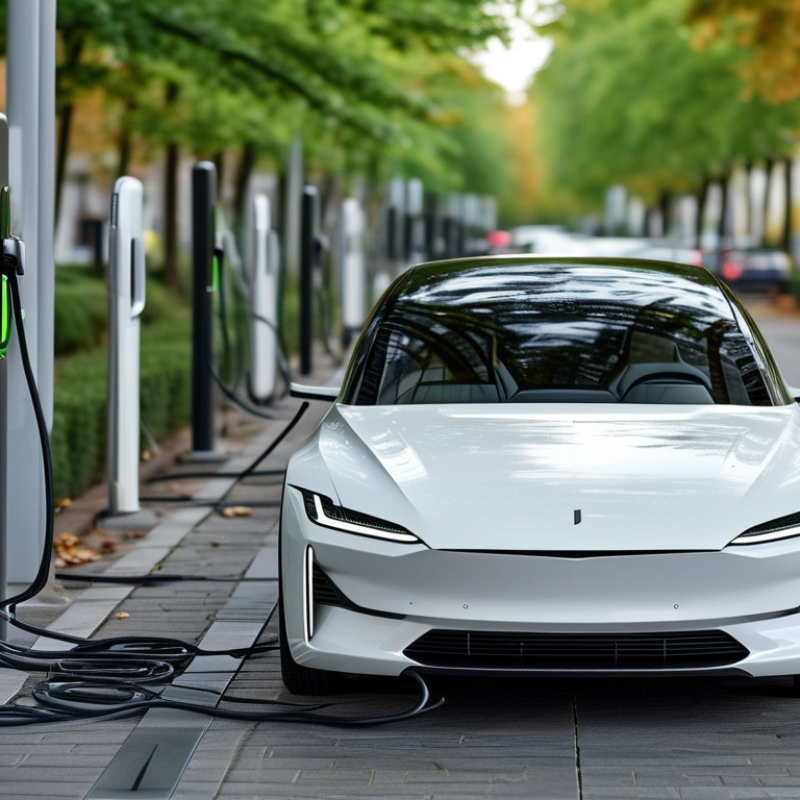
Wireless electric vehicle (EV) charging represents a significant innovation in sustainable transportation. As more consumers consider electric vehicles, understanding how does wireless EV charging work becomes crucial. This technology eliminates many challenges associated with traditional plug-in charging, making it an attractive option for global buyers.
Wireless EV charging uses electromagnetic fields to transfer energy between a charging pad on the ground and a receiver on the vehicle. This method enhances convenience for drivers, allowing for effortless charging while parked. However, the effectiveness and efficiency of this system can vary based on distance and alignment. Buyers must keep these factors in mind when evaluating options.
While wireless charging is a promising solution, it is essential for consumers to reflect on the infrastructure needs and costs. The installation of charging pads requires careful planning and investment. Additionally, potential users should be aware of current technological limitations, such as slower charging speeds compared to traditional methods. Ultimately, understanding how does wireless EV charging work will help buyers make informed decisions about integrating this technology into their lives.
Wireless electric vehicle (EV) charging utilizes magnetic resonance technology. This method eliminates the need for physical connections. Reports suggest that the global market for wireless EV charging could reach $1.2 billion by 2026, growing at a CAGR of 23%.
The process involves a charging pad installed on the ground. Vehicles equipped with receiving coils align over this pad. As the car parks, energy transfers through the magnetic field, charging the battery. Research indicates that wireless charging is less efficient compared to wired methods, with efficiency rates around 80%. This presents challenges as efficiency directly affects charging time and energy costs.
However, the convenience of wireless charging is appealing. Users can charge their vehicles effortlessly. Some reports indicate a growing demand for non-intrusive solutions in urban environments. But questions remain about the long-term impact of this technology on energy consumption and infrastructure. Electric grids may need upgrades to handle increased loads from widespread wireless charging. Further studies could clarify these issues and enhance understanding of wireless EV charging’s future potential.
Wireless EV charging is a groundbreaking technology that transforms how electric vehicles are powered. The primary components involved in this system are divided into two main sections: the transmitter and receiver. The transmitter is usually embedded in a charging pad, placed on the ground at designated charging spots. This pad generates an electromagnetic field, which is crucial for the transfer of energy.
On the vehicle's side, the receiver consists of coils that capture the emitted electromagnetic field. Once captured, the energy is converted back into usable electricity, which charges the vehicle's battery. Installing these systems requires careful planning. Engineers must position the transmitter and receiver with precision to maximize efficiency. Misalignments, even minor, can reduce charging effectiveness.
Though wireless charging offers many benefits, there are challenges to consider. Efficiency rates can vary depending on the distance between components. Moreover, the system's cost may deter some potential users. Users must contemplate whether the convenience justifies the investment. These nuances highlight the need for thorough research before adopting this technology. Detailed understanding will better inform choices as wireless EV charging continues to evolve.
| Component | Description | Function | Key Features |
|---|---|---|---|
| Transmitter Pad | Device placed in parking spot | Generates magnetic field | Wireless energy transfer |
| Receiver Pad | Installed on the vehicle | Receives energy from transmitter | Efficient power conversion |
| Control System | Manages charging process | Ensures safety and efficiency | Smart charging capabilities |
| Cooling System | Maintains optimal temperature | Prevents overheating | Enhanced durability |
| Safety Features | Protection against malfunctions | Ensures user safety | Autonomous error detection |
Inductive charging for electric vehicles (EVs) uses magnetic fields to transfer energy. This technology allows EVs to charge without physical connectors. A charging pad, embedded in the pavement, generates a magnetic field to induce current in a receiver installed in the vehicle. The process is seamless and convenient.
This method has its challenges. The alignment between the vehicle and the charging pad must be precise. Even small deviations can reduce efficiency. For users, this can be a frustrating experience. Additionally, not all EVs are compatible with inductive charging. Current infrastructure may limit options for some drivers.
While the technology offers great potential, it's still evolving. Researchers continually work on enhancing efficiency and compatibility. There are questions about the impact on battery lifespan and charging speed. As advancements occur, these concerns may address user hesitation. Inductive charging could make owning an EV more appealing in the future.
Wireless charging for electric vehicles (EVs) offers several benefits for owners. This technology eliminates the need for messy cables and connectors. Instead, vehicles charge through electromagnetic fields generated by charging pads. This convenience can make it easier for drivers to charge their cars at home or in public locations.
One key advantage is safety. Wireless charging reduces the risk of electrical shock or wear and tear on physical connectors. Additionally, it promotes better weather resistance as there are no exposed wires. Another benefit is the potential for automated charging. This can simplify the driving experience and ensure that EVs are always charged when parked.
**Tip:** When considering wireless charging, ensure your vehicle is compatible with the system. Check for specific requirements or limitations.
Some may wonder if this technology is more efficient. The reality is that wireless charging can have slightly lower efficiency compared to wired charging. Electric vehicle owners might need to assess their charging habits. Finding the balance between convenience and efficiency is crucial.
**Tip:** Regularly review charging options. Compare the time and energy consumed between wireless and traditional charging. Making informed decisions can enhance your EV experience.
The evolution of wireless electric vehicle (EV) charging presents several challenges for global buyers. One major hurdle is the standardization of technology. Different manufacturers may adopt varying protocols, complicating interoperability between different EVs and charging systems. This inconsistency can hinder user experience and create confusion among consumers.
Another challenge lies in infrastructure development. Wireless charging requires specific installations, which can be costly and space-consuming. Urban areas may struggle to integrate these systems without significant investment and urban planning. Additionally, the efficiency of wireless charging is often lower than that of traditional charging methods, raising concerns about energy loss during the transfer process.
Looking toward the future, advancements in technology could address these issues. Improvements in efficiency and cost-effectiveness are essential for wider adoption. Research into better energy transfer systems and more robust materials may enhance performance. However, the transition to wireless charging will require collaboration among stakeholders, including automakers, tech companies, and governments. Balancing innovation and practicality remains crucial for the success of wireless EV charging solutions.
: Wireless EV charging uses magnetic resonance technology to transfer energy without physical connections.
A charging pad generates a magnetic field. The vehicle aligns over this pad to receive energy.
Wireless charging has an efficiency rate of around 80%, which is less than wired methods.
Challenges include lower efficiency, potential misalignment, and the cost of installation.
Even minor misalignments can significantly reduce charging effectiveness, causing frustration for users.
No, not all EVs are compatible with inductive charging, limiting options for some drivers.
There are questions on how inductive charging may impact battery lifespan and charging speed for users.
Users may hesitate due to the system's cost and concerns about efficiency compared to wired options.
Wireless EV charging technology is transforming the way electric vehicles are powered, offering convenience and efficiency for users. At its core, the question "how does wireless EV charging work" is addressed by understanding inductive charging, which utilizes electromagnetic fields to transfer energy between a charging pad on the ground and a receiver on the vehicle. Key components include power electronics, charging pads, and control systems that ensure safe and effective energy transfer.
The benefits of this technology are manifold, including the elimination of physical connectors, ease of use, and the potential for automated charging. However, there are challenges to overcome, such as efficiency loss during energy transfer and the need for infrastructure development. As advancements continue, the future of wireless EV charging looks promising, with innovations likely to enhance its practicality and accessibility for users worldwide.
Irvion Charger