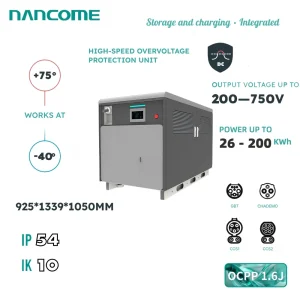
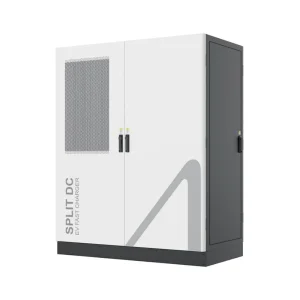
Premium commercial power delivery modules, energy storage systems, and fast chargers certified for global infrastructure deployment.
Wireless Power Transfer (WPT) technology has evolved from a consumer electronics novelty (Qi charging pads) into a critical cornerstone of industrial automation and smart mobility networks. By utilizing magnetic resonance and high-frequency electromagnetic induction fields, industrial systems can transfer megawatts of electrical energy across air gaps without physical contacts, reducing wear and tear while bypassing hazardous environments.
Key industrial sectors like smart warehouses, automated semiconductor cleanrooms, and robotic ports rely on WPT to enable 24/7 continuous operation. Standardized protocols under SAE J2954 are aligning international automakers, setting the baseline for EV wireless plates to reach over 92% grid-to-battery efficiency, directly rivaling standard DC cord setups.
Why the world’s leading technology integrators rely on Chinese manufacturing hubs for wireless and modular charging infrastructure.
Chinese factories are located within 100 kilometers of the world's most dense silicon carbide (SiC) and gallium nitride (GaN) manufacturing centers. This allows factories to rapidly prototype high-frequency power electronics, delivering optimized conversion modules that operate efficiently at standard 85kHz transmission bands.
By using dynamic robotic winding stations for electromagnetic receiver and transmitter coils, Chinese exporters achieve high uniformity in coil layouts. Automated Litz wire winding minimizes skin-effect and proximity-effect losses, ensuring batch-to-batch consistency and high magnetic coupling coefficients.
Chinese factories invest in automated testing centers, utilizing simulated dynamic alignment testers, real-time thermal cameras, and electromagnetic compatibility (EMC) chambers. This testing ensures that every device meets international standards before shipping, reducing on-site failure rates to near zero.

Guangzhou Irvion Charger Co., Ltd. is a leading provider of smart EV charging solutions, dedicated to advancing sustainable mobility through innovative and intelligent power management systems. Established with a vision to support the global transition to electric vehicles, Irvion Charger integrates cutting-edge technology, high-quality manufacturing, and customer-focused services to deliver reliable and efficient charging solutions for diverse applications.
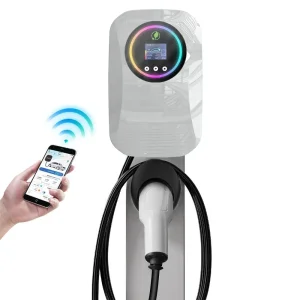
Our product portfolio includes home EV chargers, commercial charging stations, and fleet management systems, all designed to optimize energy usage, enhance safety, and provide seamless connectivity. With intelligent software platforms, users can monitor charging status, schedule sessions, and access real-time analytics to maximize efficiency and convenience.
Committed to sustainability and innovation, Guangzhou Irvion Charger Co., Ltd. continuously invests in R&D to develop next-generation charging infrastructure, supporting both residential and commercial clients in achieving their electrification goals. Our solutions comply with international safety standards and are tailored to meet the evolving demands of the rapidly growing EV market.
By combining smart technology, robust engineering, and exceptional customer support, Irvion Charger empowers individuals, businesses, and municipalities to embrace electric mobility confidently, contributing to a cleaner, greener future worldwide.
A technical framework for procurement managers evaluating wireless power transfer technology suppliers.
| Evaluation Parameter | Technical Threshold (Inductive) | Technical Threshold (Resonant) | Critical Sourcing Checkpoint | Risk Level |
|---|---|---|---|---|
| Power Transmission Efficiency | 88% - 93% at rated gap | 90% - 95% at varying offsets | Test under dynamic X-Y-Z axis misalignment. | High Risk |
| Foreign Object Detection (FOD) | Metal objects heating limit < 60°C | Deactivation within 50ms of detection | Verify sensitivity to small objects (e.g., coins, foil). | High Risk |
| EMF Shielding & Safety | < 6.25 µT (ICNIRP limits) | < 27 µT (public exposure limits) | Review active shield design and aluminum enclosure grades. | Medium Risk |
| Thermal Dissipation Strategy | Liquid cooling / Heavy convection | Heat-sink integration on receiver (Rx) | Analyze thermal performance under peak load at 50°C ambient. | Medium Risk |
| Standard Compliance | SAE J2954 / IEC 61980 | AirFuel Alliance standards | Confirm CE, FCC Part 15/18, and UL 2750 certification. | High Risk |
How global logistics, heavy industries, and urban developers deploy wireless charging technologies in real-world environments.
In modern automated logistics hubs, AGVs and AMRs run continuously without human operators. Sourcing in-pad resonant receivers allows these robots to recharge dynamically during brief stops at loading docks, eliminating offline battery swapping and minimizing fleet downtime.
Traditional plug-in charging cables pose safety risks in coastal shipping terminals and open-pit mining environments due to rain, ice, and dust contamination. Enclosed inductive charging pads provide robust protection against harsh weather, offering reliable operation in tough climates.
Cities are embedding high-power wireless charging coils at bus stops. While passengers board, the electric bus receives a fast high-power charge, extending the vehicle's driving range without requiring large, heavy onboard battery packs.
The wireless power transfer market is shifting toward dynamic in-motion charging. Rather than parking over a pad, future electric vehicles will charge while driving on specialized highway lanes embedded with sub-surface transmitter segments.
Advancements in power semiconductor materials like Gallium Nitride (GaN) and Silicon Carbide (SiC) enable switching frequencies over 100kHz. This permits the use of smaller, lighter magnetic coupling pads while maintaining high power transfer rates across larger air gaps.
Additionally, bidirectional wireless charging (Wireless V2G) is emerging. This technology allows parked EVs to feed power back into the utility grid wirelessly, helping to stabilize energy loads during peak demand hours.
AI-controlled resonance matching is also becoming standard. By using real-time impedance tracking, the transmitter dynamically adjusts its frequency to maintain optimal power efficiency, even when vehicles are parked off-center.
Key validation steps for international supply chain managers and technical engineers sourcing WPT solutions.
Technical and logistics answers for procurement engineers seeking wireless charging equipment.
Modern resonant wireless charging systems achieve 90% to 93% grid-to-battery efficiency. This is comparable to conductive plug-in systems, which average 92% to 95% efficiency, meaning the difference in energy loss is minimal.
Manufacturers use active Foreign Object Detection (FOD) systems. If the system detects a metallic or organic object between the transmitter and receiver pads, the magnetic field is cut off in milliseconds to prevent overheating.
Yes. Magnetic fields pass through non-conductive materials like snow, rain, dirt, or asphalt without power loss. The systems are typically IP68 or IP69K rated to ensure high reliability in outdoor environments.
SAE J2954 sets the offset tolerance at ±75 mm on the X-axis (direction of travel) and ±100 mm on the Y-axis (lateral direction). Modern systems dynamically adjust resonance to maintain full charging efficiency within these limits.
No, when compliant with ICNIRP public exposure safety limits. Active shielding keeps the stray magnetic flux density near the vehicle cabin well below recommended safety levels, ensuring safety for all passengers.
Aligning the pads is managed via in-car dashboard cameras, magnetic positioning sensors, and ultra-wideband (UWB) wireless signals that guide the driver or automated parking system to the correct spot.
Buyers should confirm that the products are certified to standards like CE-RED, FCC Part 15/18, UL 2750, and IEC 61980. These certifications ensure that the equipment meets international safety and electromagnetic compatibility standards.
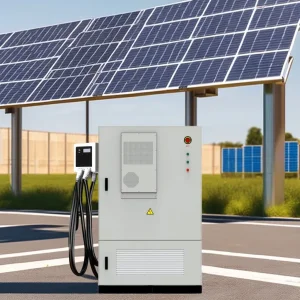
High-speed DC systems, portable chargers, and solar fleet charging units optimized for industrial applications.
 Irvion Charger